Gamification Beyond Badges: How to Engineer Real Engagement (Not Superficial Rewards)

Tarik Al-Mansouri
Jun 22, 2025
Behavioral Psychologist & Cultural Strategist

Gamification has a reputation problem. You mention the word and most people think: pointless badges, leaderboards that reward spam, streak mechanics that disappear the moment you forget to engage. They're not wrong. That kind of gamification is engagement theater. Real gamification isn't about rewards. It's about transforming the user's relationship to progress, accountability, and meaning within your product.
The first gamification implementation usually follows a pattern. You look at your retention metrics. They're weak. You read about behavioral design. You hear about game mechanics. You think: "Our app needs more game-like elements."
You add badges for signing up. You add a leaderboard. You add a streak counter that resets if users miss a day. You add points that accumulate and maybe unlock new features. You launch the update.
Your retention improves by 15 percent. Success! For two weeks.
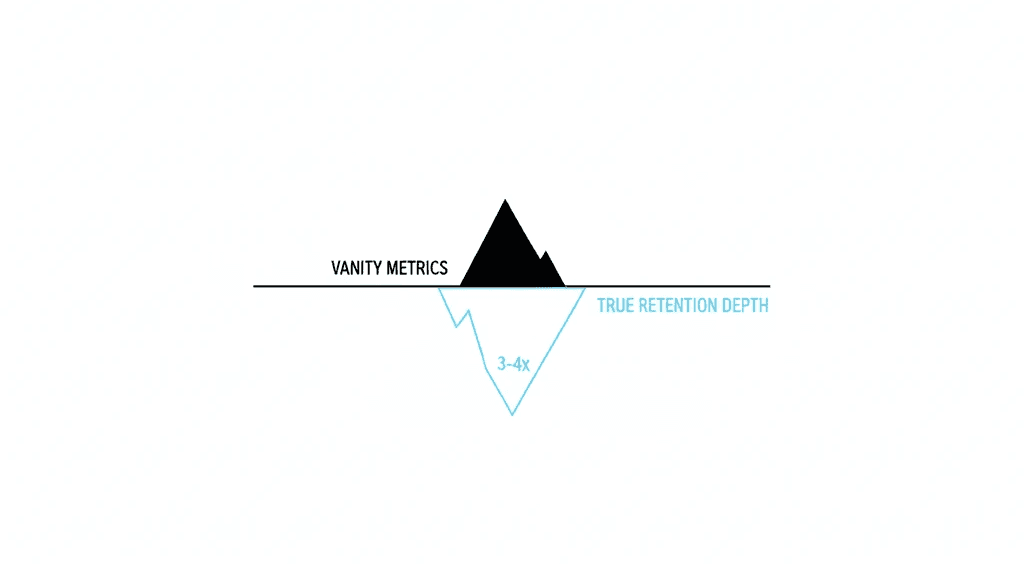
By week four, your retention is back to baseline or lower. Your users who were engaged are now annoyed by the notifications. The novelty of badges has worn off. The leaderboard is dominated by two power users and everyone else sees themselves losing. The streak counter is creating anxiety rather than motivation.
What happened is that you optimized for novelty instead of meaning. You added game mechanics without understanding the underlying psychology that makes games compelling in the first place.
Why Badges Die and Meaning Sticks
Most software developers and product managers know about gamification on surface level. They know about badges, points, leaderboards, progress bars. They see these mechanics in successful products and assume that's where the engagement is coming from.
But look closer at products that actually sustain engagement through game mechanics. Duolingo doesn't maintain a 60+ percent Day 30 retention rate because of the fire emoji that appears when you maintain a streak. The emoji is a signal. The actual engagement driver is the functional progress. Every day you're completing a lesson, you're demonstrably getting better at a language. The streak is external confirmation of internal progress. You'd be motivated to learn even without the emoji. The emoji just reinforces what you're already experiencing.
Look at fitness apps that retain users long-term. Yes, they have achievements and badges. But the core engagement driver is progress tracking. You log your workout. You see your progression over time. You can compare this month to last month. You have evidence that you're moving toward a goal you care about. The badges are dessert. The progress is the meal.
The distinction matters because it changes your design philosophy. Superficial gamification asks: "How do we make this feel more like a game?" Real gamification asks: "How do we help users see their progress, feel accountable to their goals, and understand they're capable of repeating the behavior we want?"
The Three Layers of Real Gamification
Real gamification has three layers. The first layer is progress visibility. Users need to see how much they've accomplished, where they currently stand, and how much remains. This isn't a badge. It's a clear representation of where they are in their journey. In a fintech app, this might be your savings target and how close you are to it. In an e-commerce app, this might be your loyalty tier and what you need to unlock the next tier. In a language learning app, this is literally what percent of the curriculum you've completed. Progress visibility works because it's truthful. Users can see they're moving.
The second layer is accountability structure. You're more likely to repeat a behavior if someone is watching or if you've publicly committed. This is why accountability buddies work. This is why running clubs maintain higher attendance than solo runners. This is why the military uses public recognition of achievement. The psychology is sound and predictable.
But accountability doesn't require a leaderboard. In fact, leaderboards create the opposite effect for most users—they create demotivation because most users aren't at the top. More effective accountability structures are personal (how did you do against your own targets?), small-group (how did you do compared to your friend group?), or role-based (how are you doing relative to the role or identity you've chosen?). A fintech app with a "savers circle" where you see how five friends are doing against their own goals creates accountability without creating demotivation. A fitness app that shows you your personal records and compares you to your own previous month is more effective than comparing you to strangers on a global leaderboard.
The third layer is autonomy and meaning. Users need to feel that they're choosing the behavior, not being coerced. They need to understand why the behavior matters. The most effective long-term engagement comes when users feel they're pursuing a goal that matters to them, not a goal imposed by the app. A savings app where you set your own savings target and the app helps you track progress toward it maintains engagement. A savings app where the app tells you that you "should" be saving X amount per month and judges you for not doing it triggers reactance—users rebel against the imposed expectation.
When you layer these three elements together, you get real engagement. Users see progress, they feel accountable in a way that motivates rather than demotivates, and they feel autonomous. Badges are fine. Leaderboards are fine. Points systems are fine. But they're decoration on top of a structure that's already working.
The GCC Application
Gamification in GCC markets requires cultural adaptation. The relationship-oriented nature of decision-making means that accountability to a small group (friends, family, community) is more effective than accountability to strangers or public global metrics. This is why referral mechanics and friend-based competitions work better in GCC than anonymous leaderboards.
Progress visibility needs to account for different timeframes and rhythms. Users might engage differently during Ramadan than throughout the year. A fintech app that shows monthly progress is fine, but a fintech app that helps users set goals around savings during specific months (back-to-school, holiday season, post-Ramadan spending adjustment) creates seasonal accountability that users are already thinking about culturally.
The meaning layer is especially important in GCC context. Products that explicitly connect user behavior to outcomes that matter culturally resonate more. A fitness app that connects exercise to health and family wellbeing (culture emphasizes family responsibility). A language learning app that connects learning to career advancement and regional opportunity. An e-commerce app that connects shopping behavior to savings for specific cultural milestones (wedding expenses, Hajj preparation, Ramadan spending).
The worst gamification for GCC markets is the one that ignores cultural context and treats all users as intrinsically motivated by global metrics (top of leaderboard, most points, longest streaks). This creates engagement theater. The best gamification connects to local accountability structures and culturally meaningful goals.
Testing Real vs Superficial Gamification
Here's how to tell if your gamification is working or just creating noise. Look at three metrics after you launch game mechanics.
First, look at session frequency. Did the average user increase their sessions per week? Real gamification should increase session frequency because it's creating reasons to check in. Superficial gamification might increase it for two weeks (novelty), then drop below baseline.
Second, look at feature engagement. Did users who see progress mechanics spend more time engaging with your core product, or are they just checking badges and leaderboards? If 80 percent of your engaged users are interacting with the game mechanics but only 20 percent are using your core product, you've created an engagement loop around the wrong thing.
Third, look at retention cohorts. Track users who've experienced your gamification mechanics vs users from before they existed. Do the new cohorts have meaningfully better Day 7 and Day 30 retention? Real gamification should improve retention because it's creating motivation to return. Superficial gamification creates temporary engagement that doesn't convert to habit.
If your gamification passes these three tests, you've built something real. If it doesn't, you've built engagement theater.
Building Gamification Into Product Development
The cleanest approach is to design gamification into your product from the start, not add it after. This means asking these questions before you build.
What progress do we want users to see? Not, "What badges should we give?" But, "What should users understand about how they're moving toward their goal?" If you're building a productivity app, is it completion rate? Time saved? Projects completed? Pick one core progress metric and design the visualization around it.
What accountability structure will motivate our users? Not, "Should we have a leaderboard?" But, "In what context would users want accountability? With friends, with themselves, with their community?" Design the accountability structure around the social context that motivates your user base.
What meaning or autonomy do we need to preserve? Not, "How many achievements should we have?" But, "What should users feel in control of? What goals do they care about?" Let users set their own targets and show them progress toward those targets.
These three questions should inform your gamification design from Day 1. Then when you launch, you're not adding game mechanics as an afterthought. You're reinforcing a product experience that was already designed to be engaging.
Added badges but retention hasn't moved? Let's audit your gamification mechanics and identify which engagement drivers are missing. Book a free gamification strategy session.
More articles
Explore more insights from our team to deepen your understanding of digital strategy and web development best practices.