Stop Adding Features, Start Testing Assumptions

Maya Khoury
Jan 20, 2025
Product Designer & Gamification Specialist
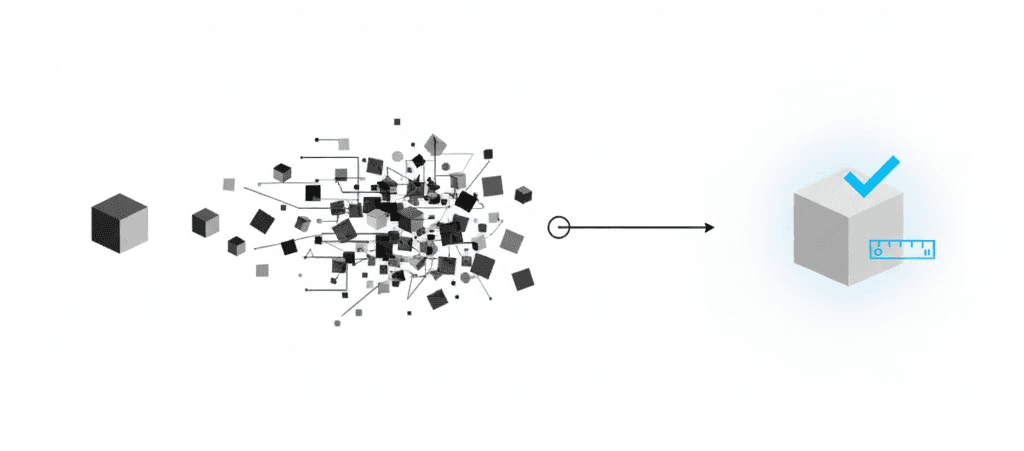
When retention stagnates and engagement plateaus, the instinct is to build more features. More payment options, another loyalty program, one more "cool" add-on. But the feature binge is a trap. If your core metrics aren't moving, the problem isn't insufficient features—it's unvalidated assumptions about what users actually need.
The Feature Treadmill to Nowhere
An Abu Dhabi e-commerce startup spent nine months in a feature development sprint that looked impressive on paper. They added social sharing, wishlist functionality, product comparison tools, a recommendation engine, loyalty points, push notifications with personalisation, and in-app customer service chat. The roadmap was packed, investors were impressed by the velocity, and the team felt productive.
Seven-day retention went from 18% to 19%. Monthly active users stayed essentially flat. Average order value declined slightly. The feature explosion produced no meaningful improvement in the metrics that actually mattered for business sustainability.
The problem revealed itself through analytics deep dive: 87% of users were only interacting with search and checkout. The other seven features collectively accounted for 13% of user sessions, and most users never touched them at all. The startup wasn't suffering from insufficient features—it was suffering from a broken core experience that made search frustrating and checkout confusing. Adding more features on top of that foundation was like adding rooms to a house with a cracked foundation.
When they finally paused feature development to conduct user research, the findings were uncomfortable. Users couldn't find products they wanted because search was poor. The checkout flow had unnecessary friction that caused abandonment. The loyalty programme was confusing and felt like busywork. None of the new features addressed the actual barriers to conversion and retention. The team had spent nine months building the wrong things because they never tested their assumptions about what users needed.
The Feature Factory Syndrome
The feature factory mentality measures progress by output rather than outcomes. Successful organisations are judged by how many features they ship per quarter, how many story points the team completes, how full the roadmap looks. This approach feels productive because there's always visible progress—new capabilities launching, the product evolving, engineering teams staying busy.
But output doesn't equal value. A feature that took six weeks to build and gets used by 3% of users once creates zero business impact despite consuming significant resources. Ten features that each reach 5% of users occasionally don't add up to meaningful engagement—they add up to complexity that makes the core product harder to understand and maintain.
GCC startups fall into this trap particularly often because capital availability creates pressure to show momentum. Founders feel obligated to demonstrate aggressive execution to justify funding rounds. Development teams want to prove their value through shipping code. Product managers worry that slowing feature development will make them look unambitious. The entire incentive structure pushes toward building more rather than validating whether what you're building matters.
The result is apps with dozens of features where usage concentrates in two or three core flows, leaving the rest as dead weight that complicates the codebase, confuses new users, and creates maintenance burden without delivering value. Every additional feature increases cognitive load, expands surface area for bugs, and makes the product harder to explain in marketing.
Signs You're Guessing, Not Testing
The clearest indicator that a team is adding features without validation is the absence of clear success metrics defined before building. If you can't articulate what specific user behaviour change or business metric improvement would indicate the feature succeeded, you're building on assumptions rather than hypotheses.
Another signal is low utilisation of existing features whilst continuing to build new ones. If analytics show that 80% of users only interact with two of your ten features, building an eleventh feature isn't solving anything. The problem is that users either don't understand the value of existing capabilities or those capabilities don't actually matter to their goals. More features just compound the confusion.
Feature ideas sourced exclusively from internal brainstorming rather than user research indicate guessing. When product decisions come from "wouldn't it be cool if..." conversations in conference rooms rather than "users are trying to accomplish X and failing because..." observations from research, you're optimising for what feels clever rather than what solves real problems.
Building features without understanding why users aren't adopting existing ones is pure guessing. A Dubai fintech added three new investment portfolio types because they assumed users wanted more choice. Usage didn't improve because the actual barrier was that users didn't understand how to use the existing portfolio options—they weren't asking for more complexity, they were confused by the complexity that already existed.
Test Assumptions Before Writing Code
The discipline that breaks the feature factory cycle is treating every feature idea as an assumption that must be tested before implementation. The assumption might be that users want the capability, that they'll adopt it if built, that it will improve a specific metric, or that the proposed implementation will actually deliver the intended value. Each of these assumptions can be tested without writing production code.
For capabilities with uncertain demand, create fake doors. Add a button or menu item in the interface that looks like the feature exists, but clicking it shows a "coming soon" message and captures the email address of interested users. If 30% of users click it, demand is validated. If 2% click it, you just saved yourself from building something nobody wanted. This costs hours of design work rather than weeks of development.
For workflow improvements, run concierge tests where you manually perform the automated function you're considering building. If you think adding an automated recommendation engine will increase engagement, manually curate recommendations for a cohort of users and measure whether it actually changes behaviour. If manual recommendations don't work, automated ones won't either—but you learned that in days rather than months.
For features requiring user-to-user interaction, test the assumption through existing channels before building new infrastructure. A Saudi social app wanted to add in-app messaging because they assumed users wanted to communicate. Rather than building chat functionality, they created WhatsApp groups for active users and measured whether people actually engaged in conversation. The groups were mostly silent, which revealed that the assumption about desire for social interaction was wrong. Building chat would have wasted months on a feature that solved a problem users didn't have.
Prototype testing validates whether the proposed solution actually works before committing to full implementation. A clickable Figma prototype can demonstrate whether users understand a new workflow, whether the value proposition is clear, whether the interface makes sense. Five user testing sessions with a prototype often reveal that your clever solution is confusing, that users expected something completely different, or that the problem you're solving isn't actually painful enough to change behaviour.
The Power of Learning Over Building
We advised a startup to halt development entirely and spend four weeks just learning. They had eight features in their backlog that all sounded reasonable, but retention wasn't improving and they couldn't understand why. Rather than building more, they conducted structured user interviews with twenty current users and fifteen churned users.
The insights were brutal. Users didn't understand the core value proposition—the app's main function wasn't communicated clearly during onboarding, so people downloaded it based on marketing promises and then couldn't figure out what it actually did. The features in the backlog wouldn't fix this because they all assumed users already understood and valued the core capability.
The solution wasn't building anything new. It was rewriting onboarding to demonstrate core value in the first session, simplifying the interface to focus on the primary use case, and removing three underused features that cluttered the experience. After implementing these changes—which required less development time than any single feature in their backlog—seven-day retention improved from 22% to 34%.
Learning what not to build is often more valuable than learning what to build. Every feature you avoid building saves development resources that can be invested in improving what actually matters. Every complexity you remove makes the product easier to understand and use. Every assumption you test before implementation reduces the risk of wasting months on wrong directions.
Outcome-Focused Development
The alternative to the feature factory is outcome-focused development where every initiative begins with a specific metric improvement goal. Instead of "build social sharing," the objective becomes "increase viral coefficient from 0.3 to 0.5 by enabling users to invite friends." This forces the team to consider whether social sharing is the right solution or whether other approaches might achieve the goal more effectively.
Once the outcome is clear, the next step is identifying the riskiest assumption preventing that outcome. For improving viral coefficient, the riskiest assumptions might be that users want to invite friends, that the proposed invitation flow will work, that invited users will actually activate, or that the existing product is good enough that users would recommend it. Test the riskiest assumption first because if it's wrong, everything else becomes irrelevant.
Testing might reveal that users do want to invite friends but the current product isn't compelling enough to recommend—solving that through feature additions would be backwards. Or it might reveal that users would recommend the product but the proposed invitation flow is too complicated—a simpler alternative could be tested through prototypes before building. Or it might show that the entire premise is wrong and improving viral coefficient requires a completely different approach than social features.
This methodology requires discipline because it means saying no to building things that sound good but aren't validated. It means accepting that sometimes the answer is "don't build this" or "build something simpler." It means tolerating the discomfort of not shipping features every sprint in favour of shipping the right things eventually.
A Riyadh fintech wanted to add cryptocurrency trading because it seemed like a trendy feature that would attract younger users. Before building, they tested the assumption by adding it to their roadmap announcement and measuring interest. Very few users expressed enthusiasm. Deeper research revealed that their core users were risk-averse savers who weren't interested in crypto speculation. Building the feature would have consumed months of development for something the target market didn't want. Testing the assumption saved them from that waste.
The Bottom Line
When metrics aren't improving, more features rarely solve the problem. The solution is almost never adding complexity—it's understanding why the current experience isn't working and fixing that first. This requires pausing development to test assumptions, conducting research to understand actual user needs, and building only what's validated to move metrics that matter.
Feature development feels productive. Assumption testing feels slow. But shipping features nobody wants is actually slower than pausing to learn what would make a difference.
Struggling with stagnant metrics? Let's audit your product assumptions and identify which features actually matter versus which are just adding complexity. Book a free product strategy session.
More articles
Explore more insights from our team to deepen your understanding of digital strategy and web development best practices.