Think You Have Product-Market Fit? Check Your Retention (The Real PMF Litmus Test)

Arjun Mehta
Apr 11, 2025
Growth Strategist & Analytics Lead
Startup founders celebrate product-market fit when they hit 10,000 users or cross $1 million in revenue. But those numbers can mask a fundamental problem: users who try once and never return. True PMF isn't measured by acquisition velocity—it's measured by whether users would be genuinely disappointed if your product disappeared tomorrow. And there's only one reliable way to answer that question: look at your retention curve.
The 50,000 User Illusion
A Dubai fintech startup pitched us last quarter claiming they'd achieved product-market fit. The evidence seemed compelling: 50,000 registered users, $800,000 in transaction volume, press coverage in regional tech publications, and interest from Series A investors. The founder's confidence was understandable—by most conventional measures, the product was working.
We asked to see their retention cohorts. The response was hesitant, which told us what we needed to know before seeing the data. When the numbers arrived, they confirmed the problem: 8% seven-day retention, 3% thirty-day retention, and a DAU-to-MAU ratio of 11%. Half their users never completed a second transaction. The 50,000 registered users were essentially 50,000 people who'd tried the product once and decided it wasn't worth coming back to.
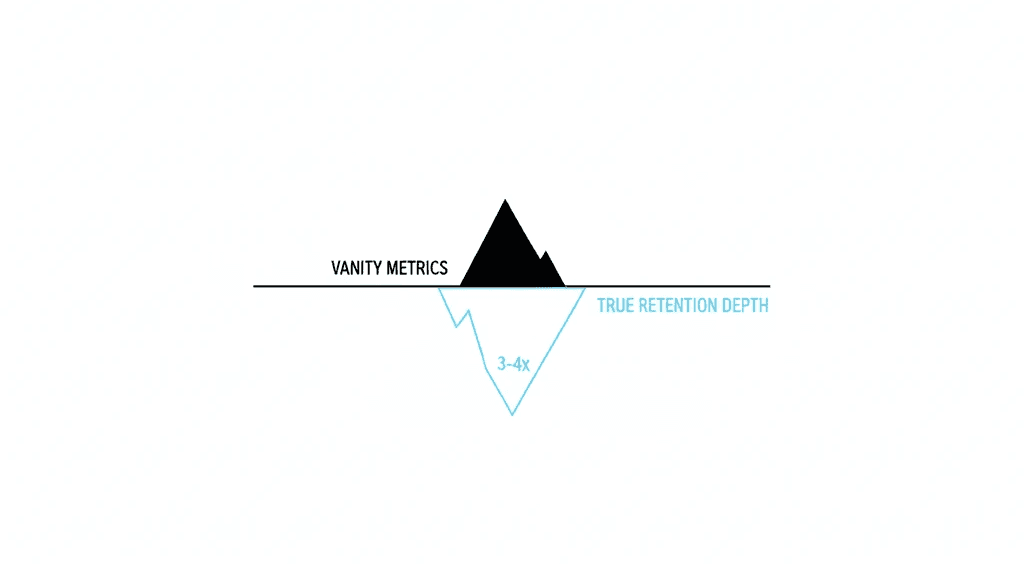
This wasn't product-market fit. It was successful user acquisition masking complete failure to deliver sustained value. The startup had spent aggressively on marketing to drive registrations, which created impressive top-line numbers that looked like traction. But underneath the vanity metrics, the product wasn't solving a problem urgent enough to drive repeat behaviour. They'd built a leaky bucket and were celebrating how much water they could pour into it whilst ignoring that nothing stayed.
The correction was brutal. Once they acknowledged that retention proved they didn't have PMF, the entire strategy needed rethinking. Were they solving the wrong problem? Targeting the wrong users? Missing critical features? Communicating value poorly? All of those questions should have been answered before scaling acquisition, but the false confidence from vanity metrics had masked the fundamental weakness until months of runway had burned.
What Product-Market Fit Actually Means
Marc Andreessen's classic definition of product-market fit is elegantly simple: it's when you've built something people want, evidenced by the market pulling product out of you rather than you pushing product into the market. The operational translation is that users adopt your product voluntarily, use it repeatedly, recommend it to others, and would be genuinely disappointed if it disappeared.
That definition only manifests in retention metrics. If users aren't returning, you haven't built something they want regardless of how many users acquired once. If they're not recommending it to others, your product hasn't created enough value to overcome the social cost of endorsement. If they'd shrug at your shutdown rather than protest, you're not solving a meaningful problem in their lives.
The GCC market amplifies this truth because word-of-mouth dynamics are more powerful in tight-knit communities. When a product truly achieves PMF in Dubai or Riyadh, organic growth accelerates rapidly through social networks and professional circles. Users become advocates not because of referral incentives but because the product genuinely solves problems they discuss with peers. Conversely, products that fail to retain users face the opposite dynamic—quiet abandonment spreads through the same networks, making subsequent user acquisition increasingly expensive as reputation damage compounds.
Consumer apps in the Gulf demonstrate this pattern clearly. Careem achieved genuine PMF by solving reliable transportation in cities where taxi service was inconsistent. Users returned multiple times weekly because the alternative was genuinely worse. Talabat built habit-forming food delivery because the convenience meaningfully improved users' lives. These weren't marketing successes—they were retention successes that marketing amplified.
Vanity Versus Value
The distinction between vanity metrics and meaningful metrics determines whether you're measuring growth or measuring PMF. Total users, downloads, page views, and gross revenue are vanity metrics because they measure activity that might not indicate value creation. A user who downloads your app, opens it once, and deletes it counts the same as a user who opens it daily—but those users represent completely different business outcomes.
Meaningful metrics measure behaviour that indicates value: retention rates across multiple timeframes, DAU-to-MAU ratio, session frequency, feature adoption depth, and user satisfaction scores that correlate with retention. These metrics reveal whether users are integrating your product into their lives or experimenting once and moving on.
Consider two hypothetical GCC e-commerce apps. App A reports 100,000 registered users and celebrates each cohort's growth. App B reports 15,000 registered users but doesn't focus on that number. Instead, App A's metrics show 6% repeat purchase rate and 22-day average time between first and second purchase. App B shows 47% repeat purchase rate and 8-day average time between purchases. App A is scaling user acquisition whilst App B is scaling a business that works. App A will likely struggle to raise Series A because sophisticated investors recognise the retention weakness. App B will likely oversubscribe their round because the retention proves PMF.
The startup that reaches 100,000 users with poor retention has built an expensive user acquisition funnel, not a product people want. They'll face escalating CAC as they exhaust early adopter segments, declining retention as product-market misalignment becomes clearer, and eventual realisation that growth metrics masked fundamental product weakness. Fixing these problems after scaling is exponentially harder than identifying them early through retention analysis.
How Investors Spot Fake PMF
Middle Eastern VCs have learned to look past vanity metrics after watching too many high-growth startups collapse when retention reality became undeniable. The due diligence questions now probe specifically into retention curves, cohort behaviour, and what drives users to return or churn.
Sophisticated investors ask to see retention cohorts going back multiple months. They want to understand whether retention is improving with product iterations or staying flat despite feature additions. They examine DAU-to-MAU ratios to understand whether users engage frequently or sporadically. They look at resurrection rates to see whether churned users ever come back. These metrics reveal product strength in ways that total user counts never can.
The specific questions cut through optimistic narratives: What percentage of your cohort from six months ago is still active? How many sessions does the average user complete before churning? What's your activation rate, and how does it correlate with long-term retention? If you lost the ability to acquire new users tomorrow, how long would your existing user base sustain the business?
These questions are uncomfortable for founders who've convinced themselves that growth equals PMF. But they're essential for distinguishing between products that work and products that just market well. The startup with 5,000 users and 40% thirty-day retention will receive funding more readily than the startup with 50,000 users and 5% retention because investors understand which scenario has sustainable unit economics.
Regional investors have also learned to calibrate retention benchmarks for GCC market characteristics. Consumer apps face higher retention requirements because switching costs are low and competition is fierce. B2B products can tolerate longer activation cycles but need to demonstrate high retention once users adopt. Fintech must prove trust through repeat transactions. Each vertical has patterns, and investors who've seen hundreds of pitches recognise when founders are rationalising weak retention versus building something genuinely differentiated.
The Retention Benchmarks That Matter
Understanding whether your retention indicates PMF requires benchmarking against category norms and understanding what drives the numbers. Consumer mobile apps average approximately 25% day-one retention, dropping to 10-15% by day seven and 5-7% by day thirty. These averages mask wide variance—gaming apps might see 15% day-seven retention whilst productivity apps might see 30%, and top-performing apps in any category regularly exceed 40% at day seven.
For GCC-based consumer apps, strong retention typically means 30%+ at day seven and 20%+ at day thirty. These thresholds indicate you've built something with genuine stickiness rather than something users try and forget. If you're significantly below these numbers after multiple product iterations, you likely haven't achieved PMF regardless of how many users you've acquired.
SaaS products measure retention differently through monthly or annual churn rates. Consumer SaaS churning more than 5-7% monthly is concerning, whilst enterprise SaaS should target annual churn below 10%. High-performing SaaS companies achieve negative net revenue churn through expansion, where existing customer growth offsets any lost customers.
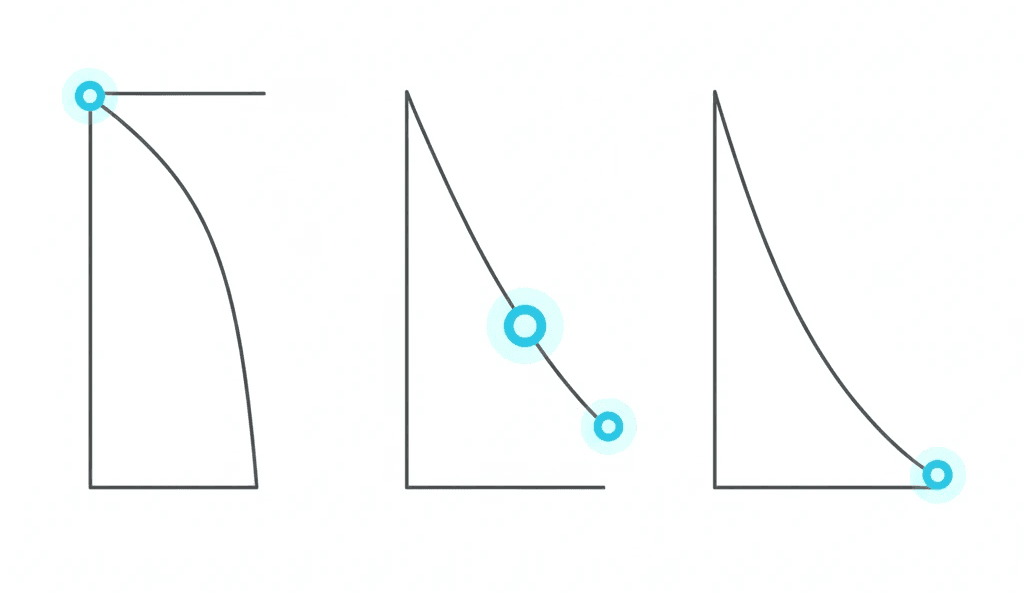
The absolute numbers matter less than the trend and the cohort shape. Improving retention over successive cohorts suggests product iterations are working and PMF is approaching. Flat or declining retention despite feature additions suggests fundamental product-market misalignment. Retention curves that flatten quickly at low levels indicate you're solving a one-time problem rather than creating ongoing value.
Activation rate—the percentage of new users who complete the core action that delivers value—predicts retention more reliably than any other early metric. If fewer than 30% of new users activate, you likely have onboarding problems or value communication failures that will suppress retention regardless of product quality. Fixing activation often unlocks retention improvements without requiring new features.
The Discipline of Honest Assessment
The hardest part of using retention as a PMF litmus test is accepting what the data reveals. Founders invest emotionally in their vision, team, and code. Admitting that retention proves you haven't achieved PMF despite months of work requires confronting uncomfortable reality. The temptation is rationalising away weak numbers—claiming they're normal for the category, blaming marketing, arguing that retention will improve once certain features ship, or insisting that the problem is temporary.
These rationalisations delay the strategic reckoning that could save the company. If retention is weak after multiple product iterations and user cohorts, the problem is almost certainly fundamental rather than superficial. Either the market need isn't as urgent as assumed, the product doesn't solve it well enough, the target user segment is wrong, or the value proposition isn't clear. These aren't problems that resolve through minor tweaks—they require strategic pivots or deep product rethinking.
The discipline is establishing retention thresholds before measuring and committing to act on what the data shows. If your category benchmark is 25% seven-day retention and you're at 12% after six months of iteration, you don't have PMF. If your DAU-to-MAU ratio is below 20% in a product designed for daily use, you haven't built a habit. If cohort retention isn't improving despite feature additions, you're building the wrong things.
Acknowledging these truths early creates options. You can pivot to a different market, rebuild core functionality, change the value proposition, or decide the opportunity isn't viable before depleting runway. Waiting until acquisition becomes unsustainably expensive or investors stop believing growth projections eliminates these options and makes failure inevitable.
The Bottom Line
Product-market fit isn't a milestone you declare—it's a state you measure through user behaviour. The users tell you whether you've achieved it through their actions: returning repeatedly, integrating your product into their workflows, recommending it to others, and demonstrating through engagement that they'd miss it if it disappeared.
Your pitch deck might claim PMF. Your retention curve reveals the truth. And if the truth is uncomfortable, facing it early whilst you still have runway is the only path to building something that actually works.
Want to understand your true PMF status? Let's audit your retention metrics and identify whether you have product-market fit or a user acquisition strategy masking fundamental weakness. Book a free metrics review.
More articles
Explore more insights from our team to deepen your understanding of digital strategy and web development best practices.