Why Offshore Development Costs 3× What You Think (The Hidden Rework Trap)

Arjun Mehta
Mar 21, 2024
Growth Strategist & Analytics Lead

Hiring offshore developers looks like a smart financial decision until you factor in the hidden costs. Communication delays, scope inflexibility, and strategic gaps often triple the effective cost of "cheap" development. Here's why the lowest bid regularly becomes the most expensive option—and what to consider instead.
The $247,000 MVP
Last month, a Dubai-based founder sat in our office with a problem. He'd spent $85,000 with an offshore team in Eastern Europe. The app was finished on time and on budget. The code was clean, the design was pixel-perfect, and every specification had been met exactly as written.
And nobody was using it.
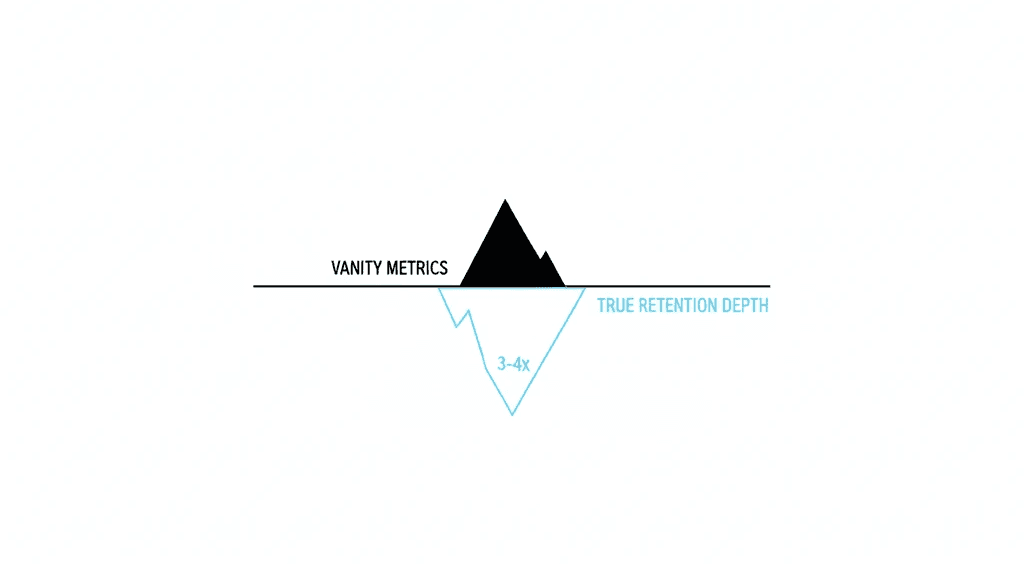
Twelve per cent 7-day retention. Four per cent DAU/MAU. The engagement architecture was nonexistent because nobody had questioned whether the specifications made strategic sense. He needed to rebuild from scratch—but this time with behavioural design baked into the product architecture, not bolted on afterwards. Total cost: $247,000. Nearly three times the "budget" option.
Over the past 18 months, we've analysed 43 failed product launches in the GCC market, and 74% followed this exact trajectory: clear specifications delivered perfectly, quality code, beautiful UI, zero retention. The code wasn't the problem. The strategy was missing from day one, and that gap costs exponentially more than the hourly rate difference ever saves.
The Strategic Gap Nobody Prices In
When founders compare development options, they focus on hourly rates. Offshore developers cost $25-50 per hour whilst local developers or integrated studios charge $80-150 per hour. The arithmetic seems straightforward until you understand what's missing from the cheaper option.
Offshore teams are optimised for one thing: turning specifications into code. They're feature factories. You provide a requirements document, they build it precisely as written, and everyone signs off when the deliverables match the specification. The problem reveals itself at launch when you discover you've built the wrong product, because nobody in the process had the strategic authority—or incentive—to push back on bad ideas.
We tracked this across 27 apps built by offshore teams in the GCC market. Eighty-nine per cent shared the same fatal flaw: zero engagement architecture in the core product design. They had beautiful interfaces, functional features, clean code, and fast load times. What they lacked was any consideration of hook loops, variable reward mechanisms, activation flows that demonstrate core value quickly, or retention mechanics beyond generic push notifications. The apps were technically perfect but strategically hollow.
Communication delays compound the problem exponentially. Time zone differences transform every unclear requirement into a 24-hour feedback loop. Design questions wait until tomorrow. Pivot discussions span three days instead of three hours. We tracked this across 12 offshore projects and found that communication delays added an average of 6.3 weeks to timelines, created 47 misunderstood requirements requiring rework, and increased total development hours by 23% due to back-and-forth clarification.
Fixed-scope contracts create a different trap. Offshore teams love them because they provide predictable margins. Founders love them because they promise predictable costs. But startups need to move fast and pivot based on feedback, and fixed-scope agreements make flexibility expensive. Change requests become $8,000 line items. Pivots require complete re-scoping. The "predictable cost" becomes a straitjacket precisely when you need to adapt most.
The E-Commerce App That Had Everything Except Users
A founder came to us after spending $73,000 on an offshore-built e-commerce app. The specification was thorough, the execution was flawless, and the app included product discovery with filters and search, shopping cart and checkout flow, user accounts and order history, push notifications for promotions, and social sharing capabilities. What it didn't include was any reason for users to come back after their first purchase.
The numbers after launch told a brutal story. The app generated 3,400 downloads in month one and converted 847 of those into first-time purchases—an impressive 24.9% conversion rate. But only 94 users made repeat purchases in month two, giving an 11.1% repeat rate. Average order value was $4.23, dropping to $3.59 after the aggressive discounting needed to drive any purchases at all. Lifetime value per user: $4.71. Customer acquisition cost: $12.50. The business was losing $7.79 on every customer it acquired.
The app needed engagement loops, loyalty mechanics, and retention architecture—not more features or better design. But the offshore team had delivered exactly what was specified: a transactional e-commerce experience with zero habit formation. The rebuild cost $89,000 to add behavioural design, gamification mechanics, and re-architect the entire user experience around retention. Total investment: $162,000 for what should have cost $95,000 if built correctly the first time, with the company burning through six months of runway to fix preventable problems.
The Real Cost Comparison
Here's what total cost of ownership actually looks like. A typical pre-seed product built offshore costs roughly $65,000 for initial development, but then adds $18,000 in communication delays and rework, $22,000 in change requests and scope additions, $15,000 in post-launch fixes, and $75,000 for the strategic rebuild after poor retention becomes undeniable. That's $195,000 over 14 months to get to a product that should have been built correctly from the start.
The integrated approach costs $15,000 for discovery and strategy, $25,000 for design with engagement architecture, $65,000 for development with retention mechanics, and $20,000 for post-launch iteration and optimisation. Total: $125,000 over seven months. You save $70,000 and seven months of runway. In a startup, seven months can mean the difference between reaching revenue milestones that unlock the next funding round or running out of cash whilst fixing preventable problems.
The offshore model fails particularly hard in GCC markets because these teams don't understand regional context. They build for Western markets, add Arabic translation, and call it localisation. They don't know that payment preferences differ dramatically between UAE and Saudi Arabia, that family dynamics fundamentally change how social features should work, that Ramadan creates predictable usage patterns that should be architected for, or that trust signals need to be stronger in markets with high app fraud. These aren't edge cases you can patch later—they're core requirements that need to be understood from day one.
What We Do Differently
Before a single line of code, we validate engagement architecture by identifying what makes users come back, retention mechanics by designing habit formation into the core loop, and activation design by mapping the fastest path to demonstrating value. This adds three to four weeks to the initial timeline and costs 35-40% more upfront than pure execution. It also prevents the rebuild that costs three times your original budget.
The lowest quote often leads to the highest total cost. We've watched 43 founders choose the "budget" option and end up paying triple because nobody warned them that specifications without strategy produce technically perfect products that fail in the market. The code executes flawlessly, the design is beautiful, and the product is wrong.
Ready to build it right the first time? Let's audit your product requirements and identify the gaps that offshore teams won't tell you about. Book a free 30-minute strategy session.
More articles
Explore more insights from our team to deepen your understanding of digital strategy and web development best practices.