Why Your MVP Should Not Be Lean: The Engagement-First Approach

Maya Khoury
Jul 14, 2024
Product Designer & Gamification Specialist
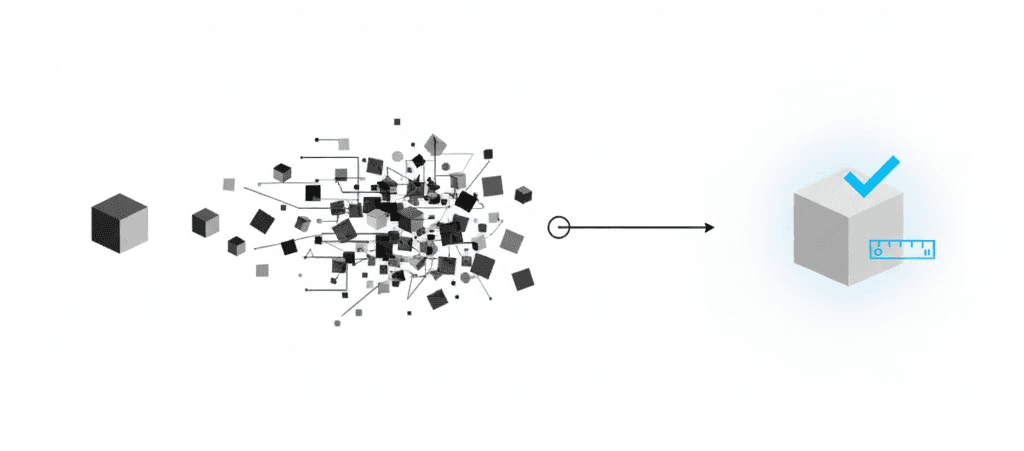
The lean startup gospel says "ship the minimum viable product and iterate." But in practice, MVPs that are too bare-bones get one-time users and zero traction. An MVP with no engagement architecture isn't validating anything—it's just wasting runway on a product that proves nothing beyond technical feasibility.
The 10,000 Download Failure
A Dubai startup launched their MVP last year with exactly what the lean methodology prescribed: core functionality, no frills, ship fast and iterate based on feedback. The product worked flawlessly from a technical perspective. Users could complete the intended workflow without friction. The team celebrated hitting 10,000 downloads in the first month.
By month three, they had 83 daily active users. Seven-day retention was 6%. The founder kept asking users for feedback, but the problem wasn't feature gaps—it was that nobody cared enough to come back. The app solved a real problem, but it solved it in the most forgettable way possible. There was no hook, no delight, no reason for the experience to stick in anyone's mind.
The team spent the next four months adding features based on user requests, assuming that more functionality would drive retention. It didn't. They eventually pivoted to a completely different approach, but they'd burned $60,000 and six months learning that a technically viable product without engagement architecture is just expensive validation of nothing useful.
The Lean MVP Trap
The lean startup methodology revolutionised how we think about building products, and its core insights remain valuable: validate assumptions quickly, avoid wasting resources on unvalidated ideas, iterate based on real feedback. But somewhere along the way, "minimum viable" became conflated with "barely functional," and engagement became treated as a luxury you add after proving the concept works.
This works in certain contexts. If you're building infrastructure software for developers or solving a painful enterprise workflow problem, users will tolerate rough edges because the alternative is manual drudgery. But for consumer products, mobile apps, and most GCC market applications, a minimum viable product with no engagement consideration is dead on arrival.
The reality is that users judge your product within seconds of first interaction. They're comparing you to polished alternatives, not to hypothetical future versions of your product. If the experience doesn't create any emotional resonance—if there's no moment where they think "this is clever" or "this makes me feel good" or "I want to show this to someone"—they'll uninstall and never think about you again.
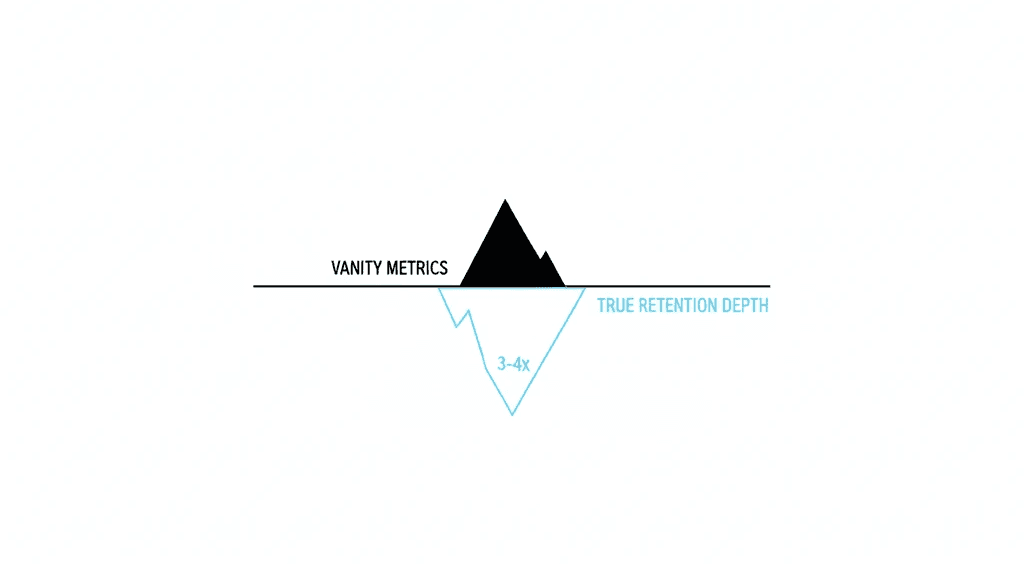
Downloads aren't validation. Seven-day retention is validation. And retention without engagement architecture is nearly impossible.
From MVP to MLP: Minimum Lovable Product
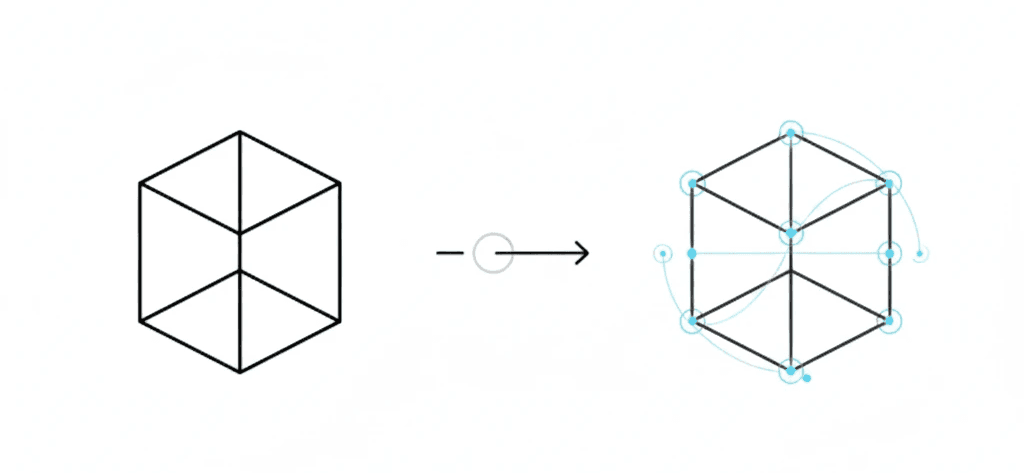
The concept we advocate is shifting from Minimum Viable Product to Minimum Lovable Product. The distinction isn't about adding features arbitrarily—it's about ensuring that even your simplest version creates an experience worth returning to.
A Minimum Lovable Product includes three elements that pure lean MVPs typically skip. First, it has an emotional hook—something that makes users feel accomplished, surprised, or delighted during their first interaction. This doesn't require complex features; it requires intentional experience design. Second, it builds in a return trigger from day one, whether that's a progress indicator, a streak mechanic, a social element, or a variable reward that creates anticipation. Third, it demonstrates clear value within the first session rather than requiring multiple uses to understand the benefit.
The difference isn't scope—it's intention. An MLP might actually have fewer features than a feature-complete lean MVP, but those features are architected around retention loops rather than just functional requirements. You're not adding features; you're adding psychology.
Building Engagement Into Day One
Here's what engagement-first MVP development actually looks like in practice. Before you define your feature list, you map the core user journey from first open to habitual use. What's the smallest experience that could create a feeling of progress or accomplishment? How do you make the value tangible within sixty seconds? What triggers will bring users back tomorrow?
For a fintech savings app, the lean MVP approach might focus purely on functionality: create account, link bank, set savings goal, automate transfers. Technically complete, but emotionally flat. The engagement-first approach asks different questions: How do we make the moment of setting a goal feel motivating rather than administrative? Can we visualise progress in a way that creates anticipation? Is there a moment in the first session where the user feels smart or accomplished?
This might mean adding a simple progress visualisation, showing projected outcomes based on their inputs, or celebrating their first automated transfer with something more emotionally resonant than a confirmation message. None of these are additional features in the traditional sense—they're the same features designed with emotional impact in mind.
For a delivery app, the lean MVP delivers food from A to B. The engagement-first MVP makes the tracking experience delightful, adds a moment of surprise when the food arrives early, or creates a subtle streak for consecutive orders. The core functionality is identical, but the experience architecture is fundamentally different.
This requires discipline because it feels inefficient. Founders want to ship fast, and adding "polish" feels like wasted time. But engagement mechanics aren't polish—they're the difference between validating that your product works technically and validating that your product creates behavior change.
The Saudi Fintech Comparison
Let's compare two hypothetical fintech MVPs launched in Saudi Arabia targeting young professionals. Both solve the same problem: making international transfers easier and cheaper than traditional banks.
Product A takes the lean approach. The MVP includes account creation, KYC verification, transfer functionality, and transaction history. It works reliably, the exchange rates are competitive, and the interface is clean. Users can accomplish the core task with minimal friction. Seven-day retention: 11%. Month two retention: 4%. The founders add features based on user requests—multi-currency wallets, saved recipients, transfer scheduling—but retention barely moves.
Product B takes the engagement-first approach. The MVP includes the same core functionality but architects it differently. During account setup, users estimate their typical monthly transfer volume, and the app shows them their potential annual savings versus traditional banks in large, bold numbers. After their first transfer, they unlock an achievement and see their progress toward the next tier of reduced fees. The interface includes a running tally of total money saved since joining. There's a simple referral mechanic that gives both parties a fee-free transfer.
Product B has fewer features than Product A—no multi-currency wallet yet, no transfer scheduling—but seven-day retention is 34%, and month-two retention is 21%. The difference isn't feature completeness; it's that Product B designed for habit formation from day one whilst Product A assumed engagement would emerge naturally from utility.
Both products validate technical feasibility. Only one validates that users will actually build this into their behavior.
The Metrics That Actually Matter
For an MVP, success isn't measured by whether users can complete the workflow—that's table stakes. Success is measured by whether users choose to complete the workflow repeatedly. This shifts the validation metrics entirely.
Activation rate—the percentage of users who complete your core action in their first session—becomes critical. If fewer than 30% of users experience your core value proposition on day one, your onboarding or value communication is broken, and no amount of feature addition will fix that.
Seven-day retention reveals whether you've created any habit formation. For consumer apps in the GCC market, anything below 20% is a red flag that suggests fundamental engagement problems. This isn't something you can "fix later"—if users don't find a reason to return within the first week, they've mentally categorised your product as forgettable.
The lean MVP philosophy suggests you can ship a bare-bones product, measure these metrics, and then add engagement. But engagement isn't additive—it's foundational. You can't retrofit delight into a forgettable experience. You can't add psychology to a product that was architected around pure utility.
The Bottom Line
Lean methodology teaches us to avoid wasting resources on unvalidated assumptions. But launching a minimum viable product with no engagement consideration is itself an unvalidated assumption—the assumption that users will tolerate a forgettable experience whilst you iterate toward something lovable.
They won't.
In the GCC market especially, where users have high expectations and low tolerance for mediocrity, your MVP needs to create emotional resonance from day one. This doesn't mean building every feature. It means building the right features with the right psychological architecture.
Downloads are vanity. Retention is reality. And retention without engagement architecture is nearly impossible.
Stop shipping minimum viable products that prove nothing beyond technical competence. Start shipping minimum lovable products that validate whether you can change behavior.
Ready to build an engagement-first MVP? Let's map your core user journey and identify the psychological hooks that will drive retention from day one. Book a free product strategy session.
More articles
Explore more insights from our team to deepen your understanding of digital strategy and web development best practices.